
Google has updated its privacy policy to clarify that information from Gmail, Google Drive, and Google Photos may influence personalised advertisements when users choose to share their data with other Google services.
The change, which took effect on October 16, 2026, introduces an exception to Google’s previous statement that it does not show personalised ads based on content from these services. The updated policy says this protection applies unless users choose to make their data available to other Google services that support personalised advertising.
The update has raised privacy concerns, particularly as Google expands its artificial intelligence (AI) features across its products. The Policy also notes that it does not share users’ information with advertisers.
How Google’s Privacy Policy Has Changed
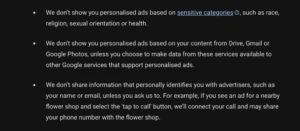
Previously, Google’s privacy policy stated that it did not use content from Gmail, Drive or Photos to personalise advertisements. The revised wording retains that commitment but introduces a condition for information shared with other Google services.
Under the updated policy, services such as Google Search and Gemini may access information from connected apps to provide more personalised experiences. Search may also process some of the information users allow it to access when personalising content, including advertisements.
This means information shared through connected services could influence the adverts users see, depending on their settings.
How Personal Intelligence Could Affect Your Ads
Google’s Personal Intelligence feature allows users to connect information from supported apps to its AI tools, helping them receive responses tailored to their personal context.
For example, connected information from emails or photos could help an AI search feature provide more relevant recommendations. However, Google’s updated policy indicates that information shared with services supporting personalised ads may also influence advertising.
Google maintains that advertisements will not be based directly on users’ Gmail inboxes or Google Photos libraries. The company also says advertisers do not receive direct access to this personal content and that sensitive information will not be used to personalise ads.
The distinction is important: Google says it is not simply using users’ inboxes as direct advertising profiles, but information derived from data voluntarily shared with connected services may still contribute to personalisation.
What Google Says About User Privacy
Google has described connecting apps as an entirely optional choice. The company says advertisements will continue to reflect factors such as users’ search queries, the context of responses and their interests.
However, the policy change has prompted questions about how clearly users understand the consequences of connecting their personal information to AI services.
As Google’s ecosystem becomes increasingly integrated, users may need to pay closer attention to which applications they connect and what information those integrations make available.
How to Review Your Google Privacy Settings
Users concerned about their information influencing personalised advertisements can review their connected-app settings.
Depending on their account and available features, they can:
- Open their Google Account settings.
- Select Data & privacy.
- Look for Personalization settings and the connected-content or Search personalisation controls.
- Review which services have permission to share information with Google Search.
- Disconnect Google Workspace apps, including Gmail and Drive, or Google Photos if they do not want those services connected.
Users can also review the connected-app settings within Gemini where available. Menu names may vary by account, region and product version.
Disconnecting an app may not automatically delete information already saved in other Google activity records, so users concerned about stored data should review their activity and history controls separately.
What the Update Means for Google Users
Google’s revised privacy policy highlights a growing trade-off between convenience and privacy. Connecting personal information to AI tools can make search results and recommendations more useful, but it may also allow information derived from that data to influence personalised advertisements.
For users, the key takeaway is to understand which services have access to their information and review those permissions regularly.
As AI becomes more deeply integrated into everyday applications, transparency about how personal data is used will remain an important part of the privacy debate.